The MICA Project
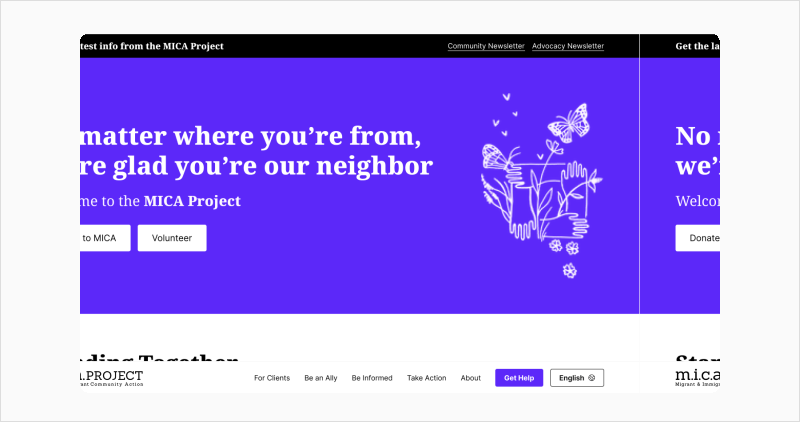
Design Allies partnered with the MICA Project to develop a content and architecture strategy for an approachable multi-lingual website that better served their community.
CAUSE
Civil Rights & Advocacy
ROLE
Research & Strategy, Design & Architecture
TOOLS
Google Workspace, Notion, Figma
DURATION
4 weeks
✦✦✦
“Great attention to detail… you all did a great job prioritizing the agencies feedback over your own ideas and were able to bridge many of our concerns.”
Amanda Lopez Cachane
Director of Accountability and Culture, MICA Project
Help where help is needed
MICA has struggled to meet their surging impact and needs their digital presence to “play bigger” with a multi-lingual strategy that makes information widely available to targeted audience groups. Their dated hosting platform has made it difficult to manage this multi-lingual audience, forcing them to come up with piecemeal content solutions. To address this they’ll need a scalable platform that helps them level up their content management, language support, and overall design standard.
PROJECT GOALS

Untangle the current language complexity impacting content and navigation, and define a path forward to a more modern localization approach.

Structure content so that it supports users within the logical flows that make sense for their needs.

Provide a consistent template model that lets the team deliver content in more systematic way and is managed with user-friendly, scalable admin tools.
Scoping the work
MICA needs an intuitive navigation model that supports different user roles and actions, combined with proper localization to make all content available to all language preferences. Simultaneously, managing the site needs to be easier, with dependable templates supporting staff as they add and evolve content over time. Our efforts focused on an evaluation of their existing content platform, an architecture assessment combined with medium fidelity templates of all pages, a proposal for a new localization enabled hosting platform, and high fidelity examples of a few key pages. With these recommendations, MICA will plan their development timeline and pursue grant funding.
Discovery
- Kick-off and goal alignment
- Weebly site audit
- Audience persona and content analysis
Design
- Content modeling and navigation restructure
- Wireframes, standardized content template development and prototyping
- Brand guide updates
- Platform recommendation documentation
- Alignment checks, documentation and knowledge transfer
Development*
- WordPress framework setup & optimization
- Custom “Reusable Content Blocks” development
- LGL form integration
- Multi-language localization implementation
- Legacy content migration from Weebly
- Final WCAG 2.1 AA accessibility testing
Launch*
- Knowledge transfer and tool training
- “Quick Start” documentation
- Go-Live plan and production environment deployment
*Not part of Design Allies project
Structuring the content
As usual, we began with a full content audit to get an elevated view of MICA pages and navigation categories. This revealed that the site is currently operating as a flat hierarchy without a directory structure to inform SEO about the page weights across the site. This should be addressed quickly, as it negatively impacts their ranking performance.
Card sorting and flow modeling exercises revealed two dominant user types; those seeking legal services (clients) and community members (allies) who are looking to support the MICA mission. Today, these two use cases don’t have distinct pathways for action, and material relevant to both is interwoven in blurred categories. As a result, users experience content in a fragmented way and miss opportunities to flow through desirable outcomes from learning, to volunteering, to donating, or more being led through MICA’s rich content story.
It’s also important to note that a significant portion of MICA’s content is available in either English or Spanish which risks leaving a Spanish speaker unable to donate, or an English speaker missing vital information to protect themselves during an immigration raid.

Built around user roles, the site structure leverages several clear, verb-forward categories alongside persistent calls-to-action for immediate help and localization. Key financial information was also added into the hierarchy as part of the About content to help keep potential donors engaged without creating unnecessary exit points.
Templating consistency
After identifying the semantic themes within the existing content, we built a small collection of flexible templates that will provide useful constraints to the MICA team. These clean, familiar layouts will let them focus on the story they are telling or the action they are encouraging.
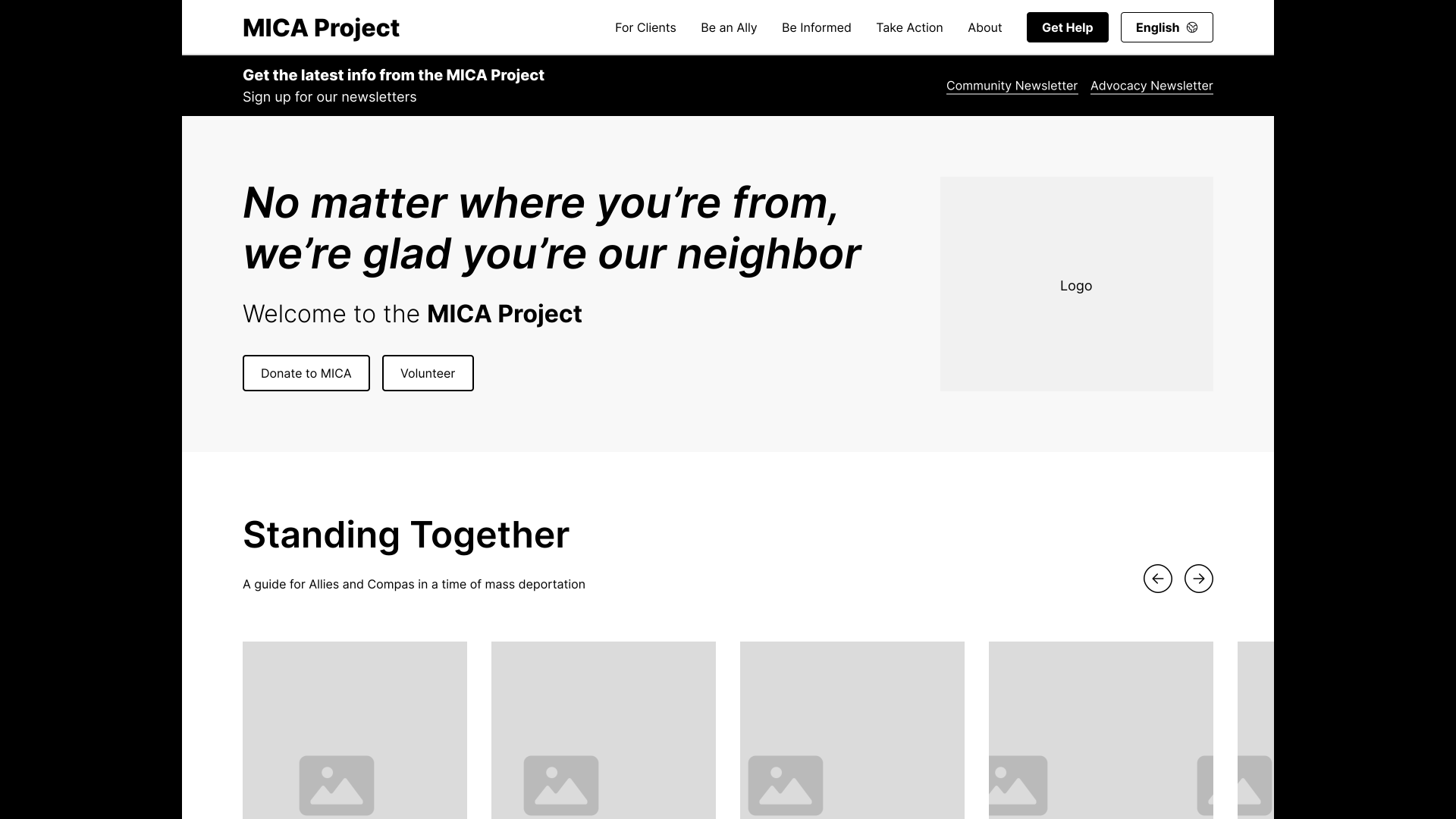
Home
A large welcome message and visual tiles introduce MICA, giving users a sense of belonging as they take in the prominent navigation and CTAs.
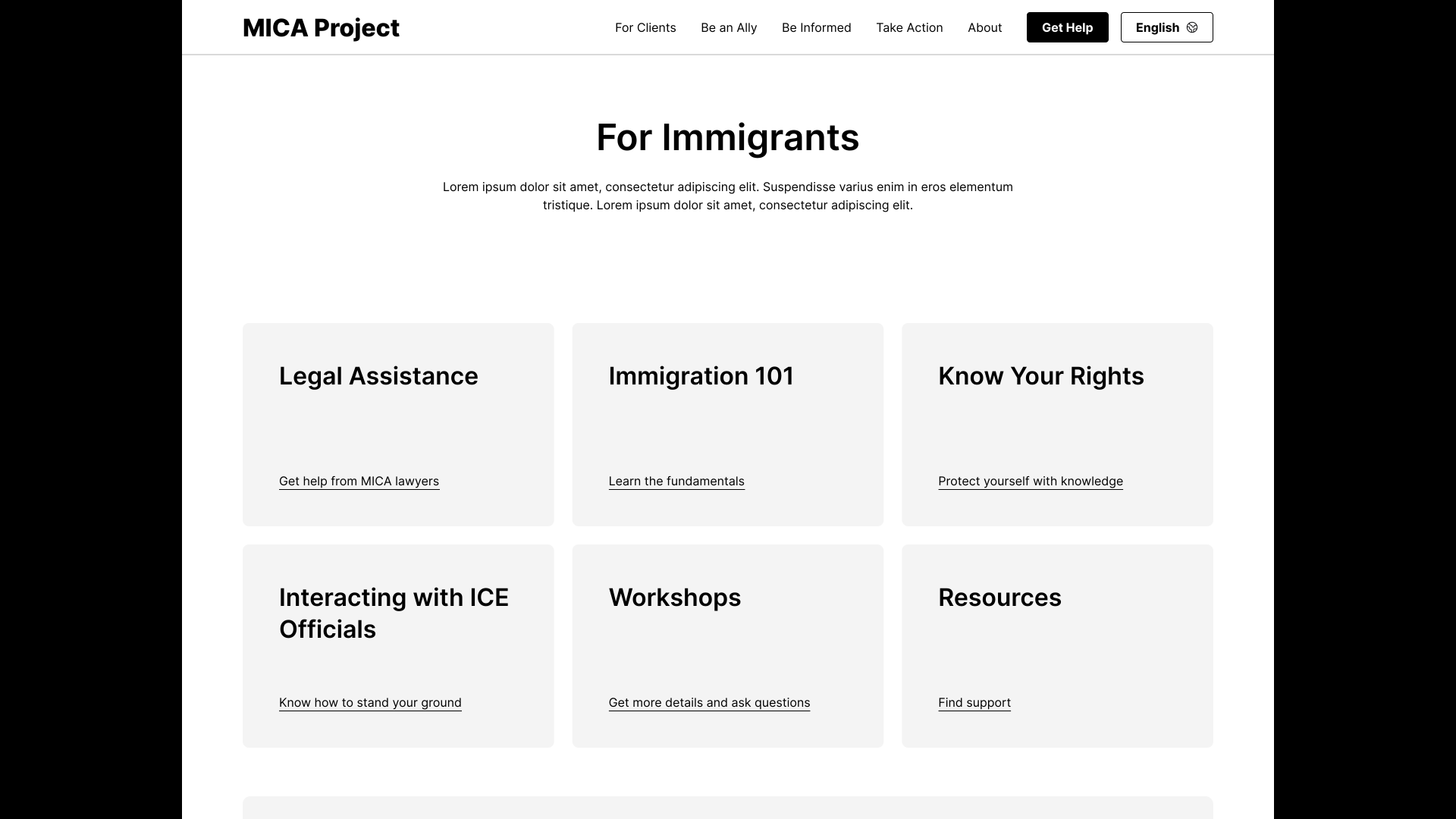
Springboards
Large tiles to display links in within a dashboard view. An accessible, friendly pattern that can be used throughout to support users with easy to navigate road signs.
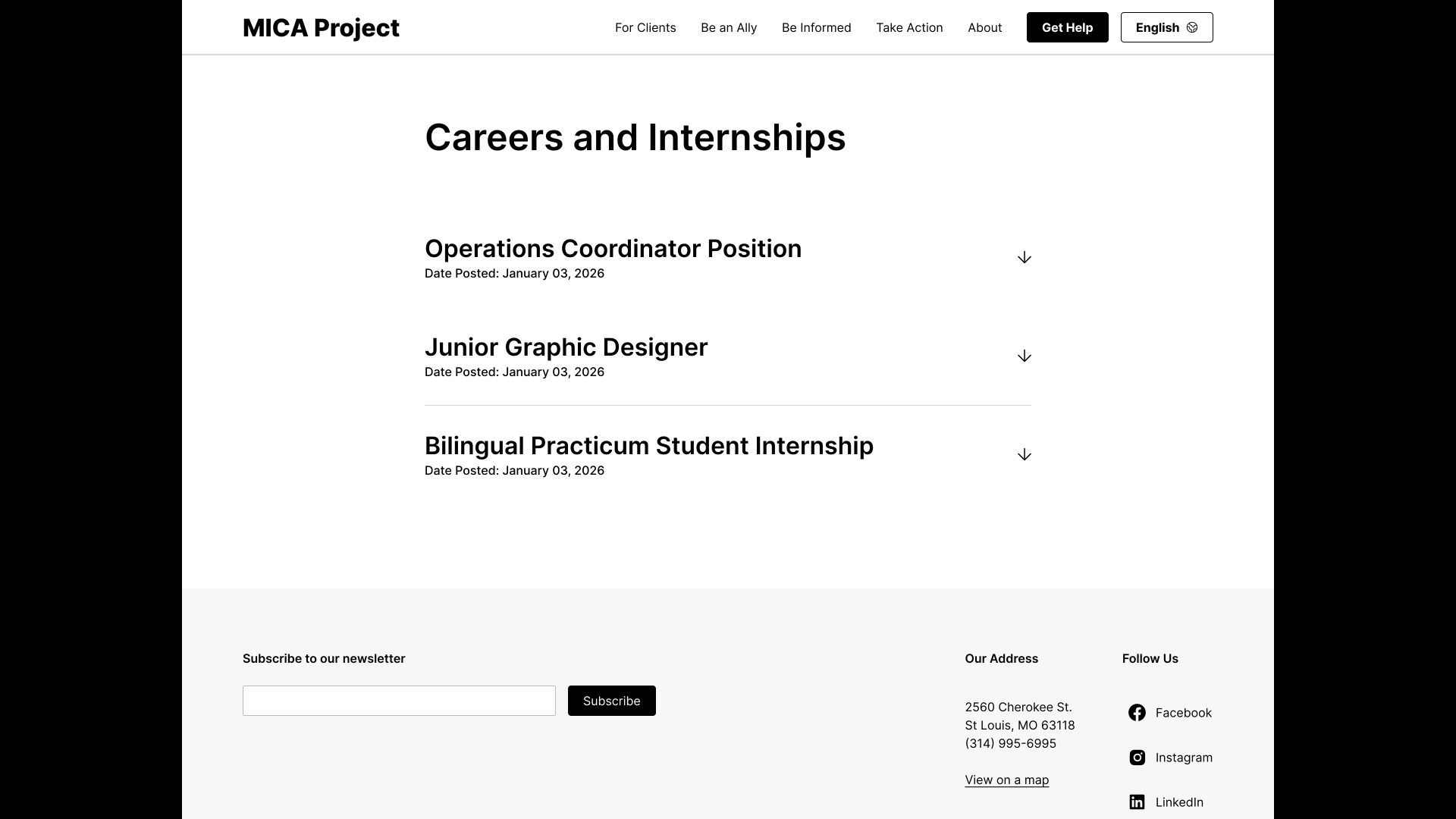
Options List
A list of similar items that can be expanded to reveal additional details. For MICA this takes the form of volunteer opportunities, job posts, or news articles.
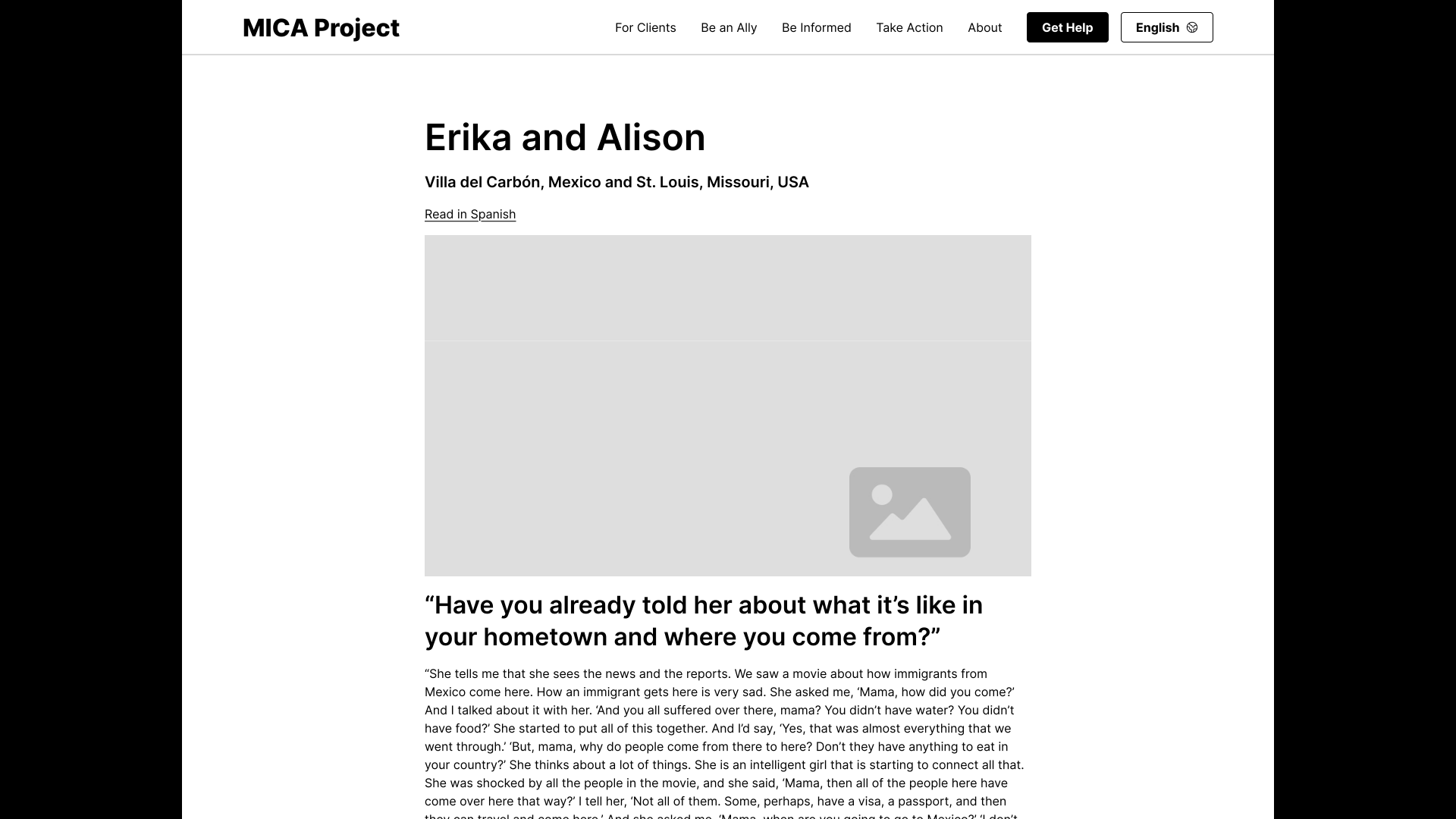
Articles
Long form content paired with photos to communicate a personal side to the impacts of MICA’s work.
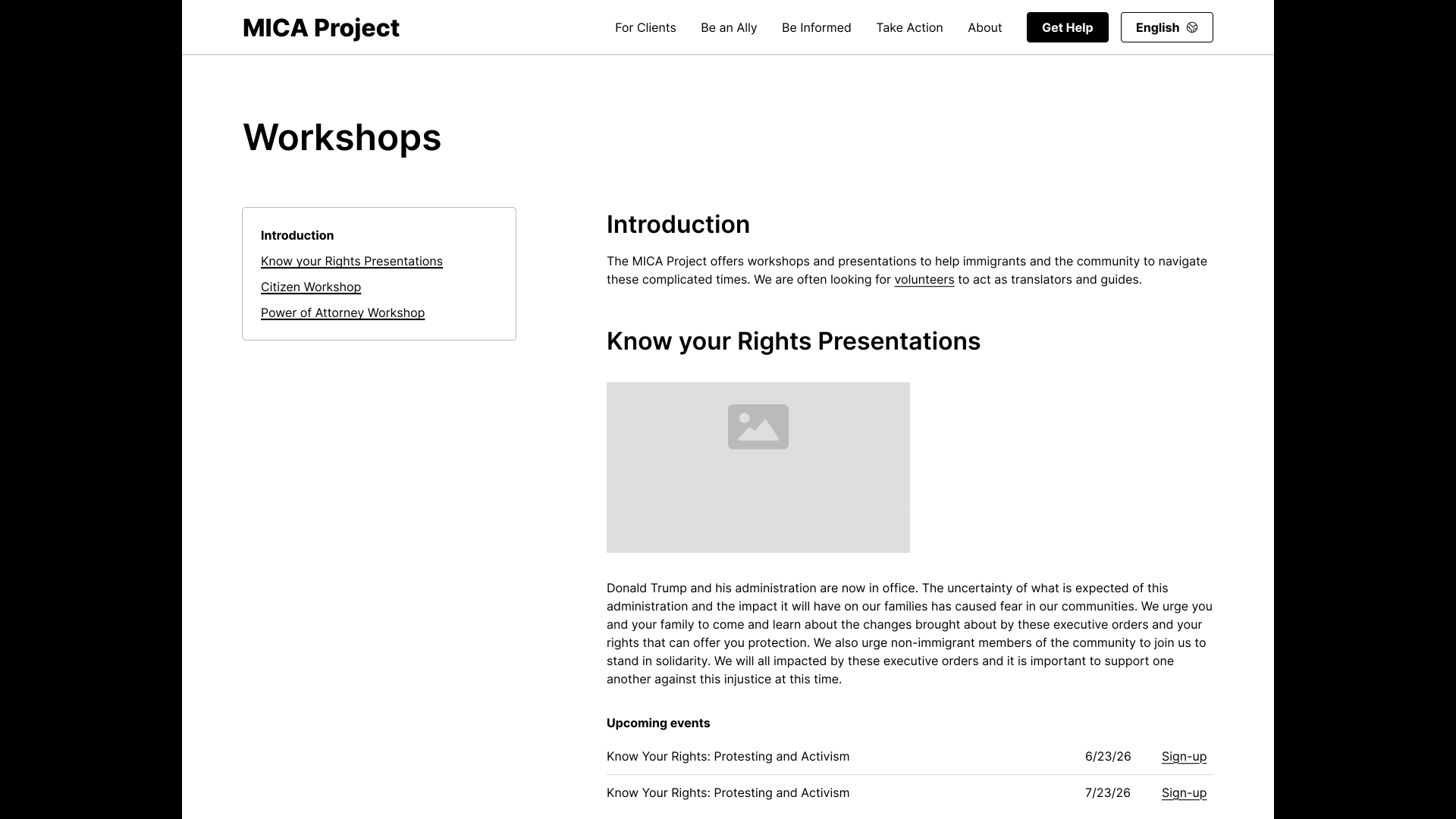
Articles with Side Nav
A learning document with distinct section headers and a sticky sidebar navigation so that a user can jump to any section on demand.
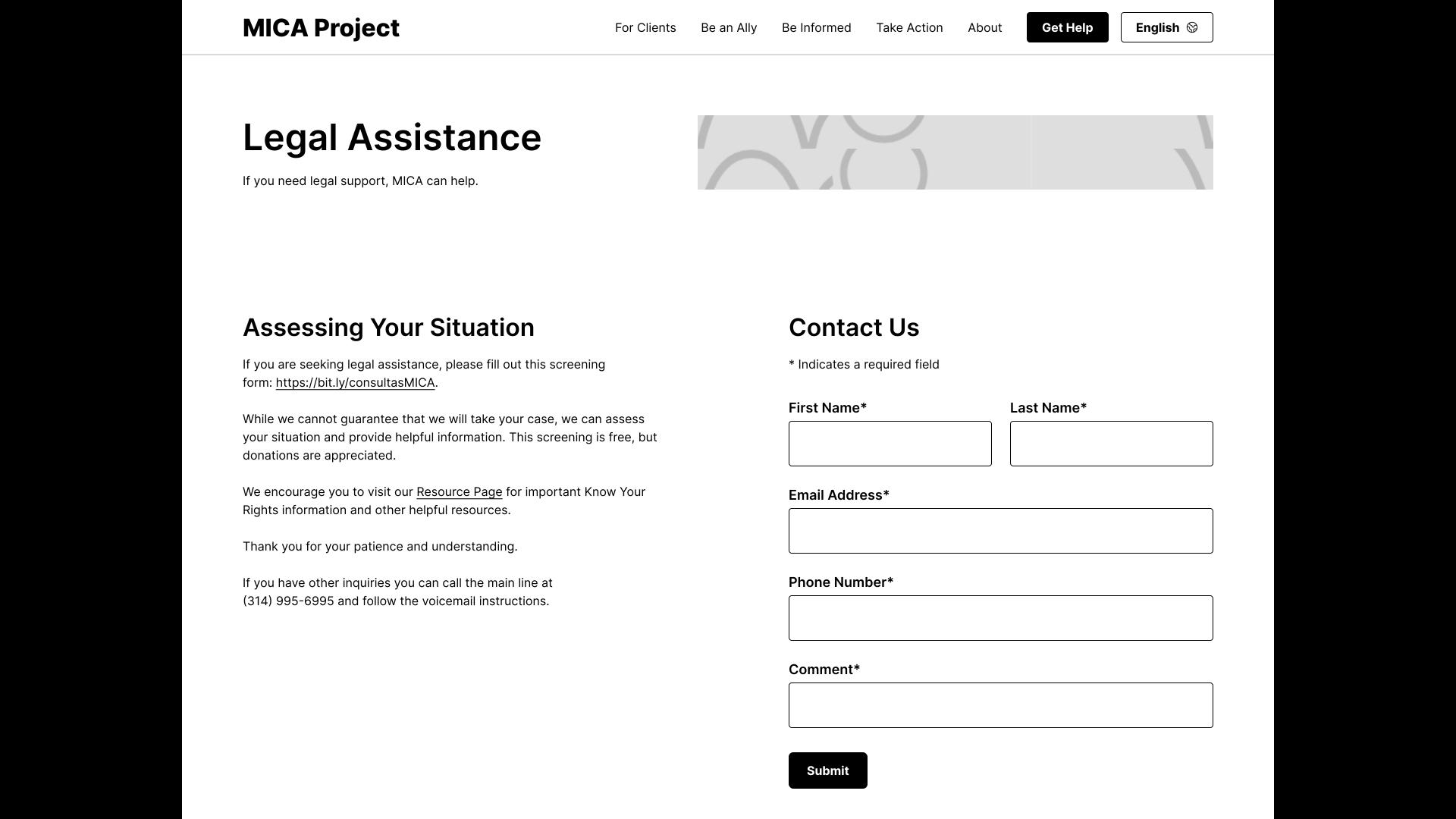
Forms
Capturing user interest, donations, or other feedback, paired with instructions or supporting documentation.
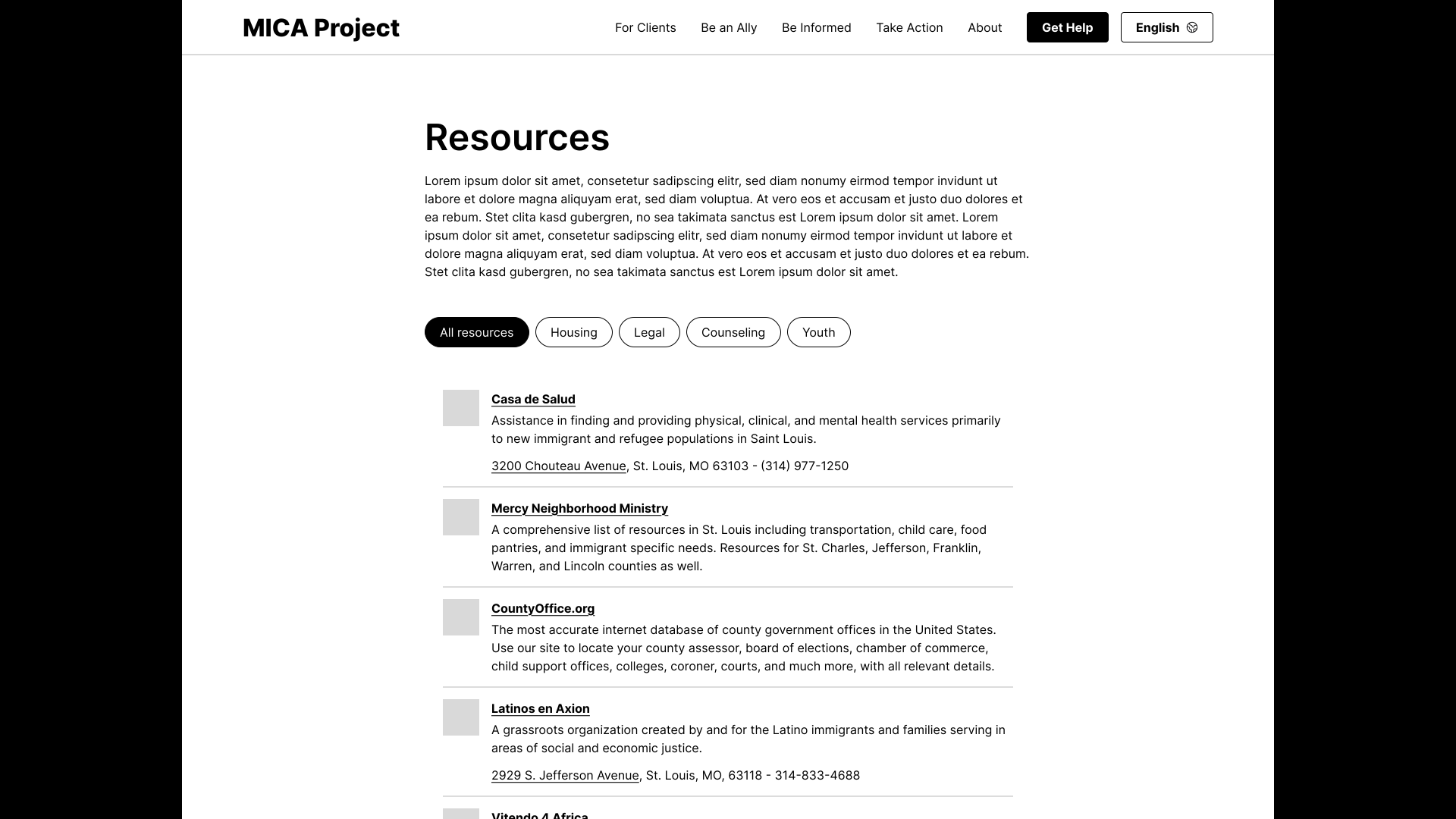
Gallery List
Vertically stacked items with photo and text descriptions. Each item can progressively drive users to secondary content with more granular details.
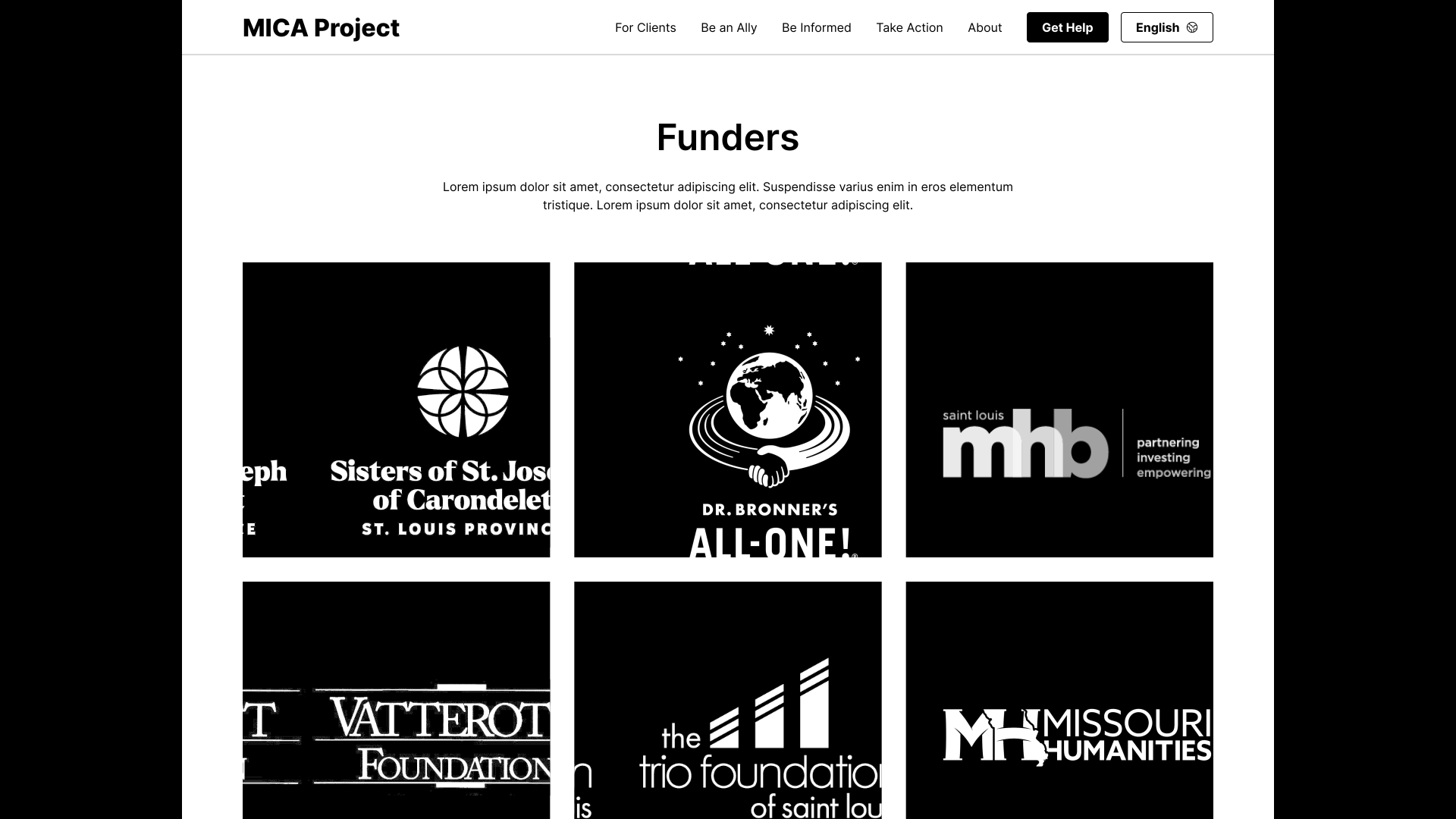
Gallery Grid
A grid of images that can be interacted with to reveal additional information.
Technical recommendations
MICA’s current platform and localization solution is a Weebly hosted template with page-level Google translate widgets which are combined with static navigation labels that show multiple languages simultaneously (eg. About MICA/Sobre MICA). Importantly, Weebly’s new owner, Square, is no longer offering platform updates and recommends that users manually transition their content to their alternate platform Square One. Our assessment is that Weebly lacks proper template management and localization support.
To find alternative options that meet MICA’s requirements, we reviewed three low complexity options: Square One, WordPress, and Webflow. Based on cost, ease-of-use, and breadth of localization options, we are recommending WordPress (WP) as it supports MICA’s required integration with LGL forms, offers WCAG compatible themes and validation plugins, has decent design functions, and is offered by many hosting services at very reasonable prices. It is also ubiquitous within the non-profit space, ensuring that future employees will have comfort with the system.
Specific to localization, WP offers a range of plugin options, from free (static or basic) to $200 per year (AI-generated with page level overrides). We researched the strengths and weaknesses of automatic translation services vs. static content managed by staff and believe automatic translation is worth trying for the initial effort, but informed MICA that costs or quality in translations may leave something to be desired. Fortunately, WP can support both approaches.
Brand guidelines
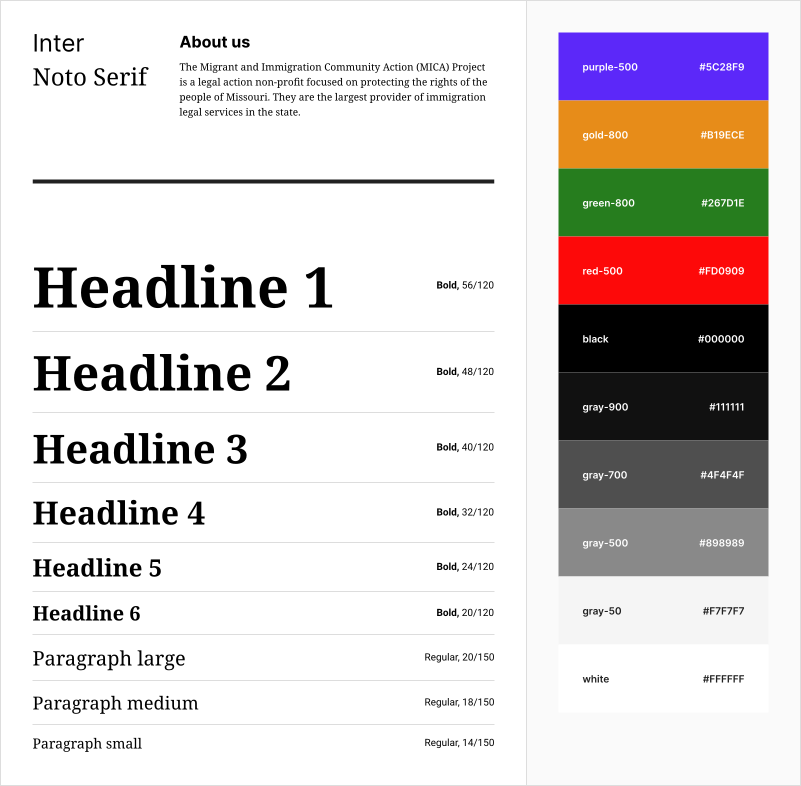
MICA’s colors and logo are seen as steadfast parts of their community appeal, with the bright color palette reflecting the diversity of the people they serve. With that in mind we focused design scope around tools and teaching to define brand standards within the organization, and working within the existing color palette to bring some color nuance. We also selected the open source Noto Serif font for its friendly, welcoming style paired with Inter to be a solid baseline for navigation and buttons.
The results
While we didn’t build the final site, we provided a blueprint and a technical roadmap to migrate to a modular WordPress environment, along with a set of high-fidelity wireframes, and a content strategy recommendations based on scannable, “chunked” information.
Key takeaways:
- Guidelines for moving away from dense “walls of text” to scannable, modular structures so that people in high-stress situations can find help quickly.
- Distinct digital journeys were created for those seeking legal information and those wishing to support them, ensuring localized resources are prioritized for those needing them most.
- A technical outline and strategy was provided for migrating to a stable WordPress environment, baking accessibility standards (WCAG 2.1 AA) and mobile-responsive designs into the organization’s foundation.